Driving Down Scott Rd Looking For Weeds
2015
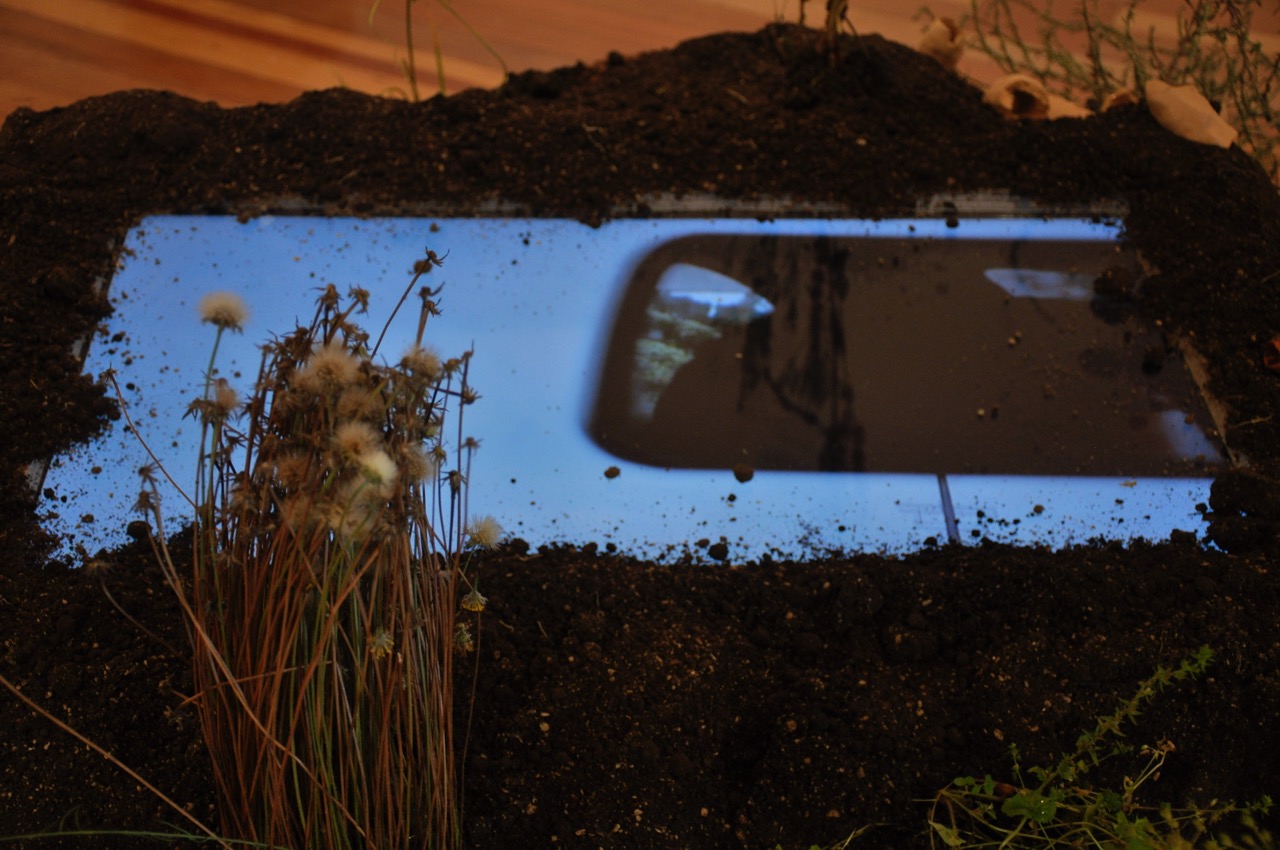
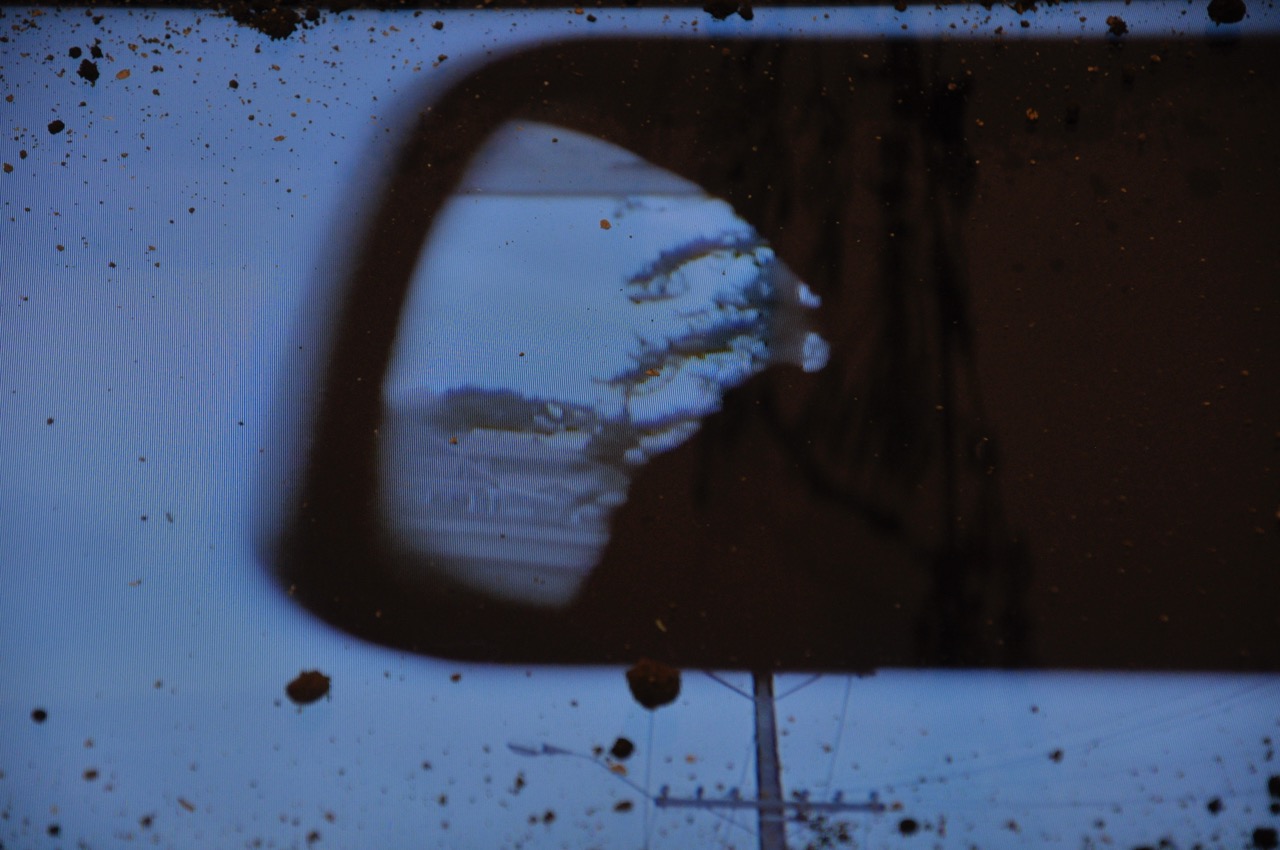
To drive is to occupy multiple positions and distances to an everyday experience of time. In the work Driving down Scott Road looking for weeds (2015) the rear-vision mirror reveals the existence of at least two different subjective temporalities converging in the image. Angled toward the sky, the majority of the frame is filled by the slow progression of trees and clouds as the camera is driven down the road. In the mirror, the angle is shifted, showing the top of my head and a view of the right-hand passenger window. In the mirror, a virtual space, the world seems to race by at a different angle to the rest of the frame. Objects may be closer than they appear. In this screen shot above, the house of R.O. Clark appears above and beside the back of my head, a trace of the wider research that this work is sited in. When driving, I think about ways of looking and experiencing time. When looking ahead, at a specific point into the distance,the driver processes future actions on the road—when to turn, change speed.
This mediates the way time is experienced. As the point in the distance comes towards and past the car, the delay (between its recognition as a point in the distance and its immediate contact with the vehicle) marks an event. Compare this to the image seen simultaneously through a windscreen and a rear-vision mirror. The mirror is angled in such a way that the distance between the inside of the vehicle and the outside world alters the rhythmic arrangements of space and time. The mirror shows the past folding away at the same time as the window shows the world moving towards the car, the actual moment where it passes the driver obscured. The folding of time and space occurs in the mirror.
Shown as part of 'Thinking Feeling' at the Physics Room and Ramp Gallery, and in 'FORM' at Papakura Art Gallery, 2015.
© Copyright Ziggy Lever
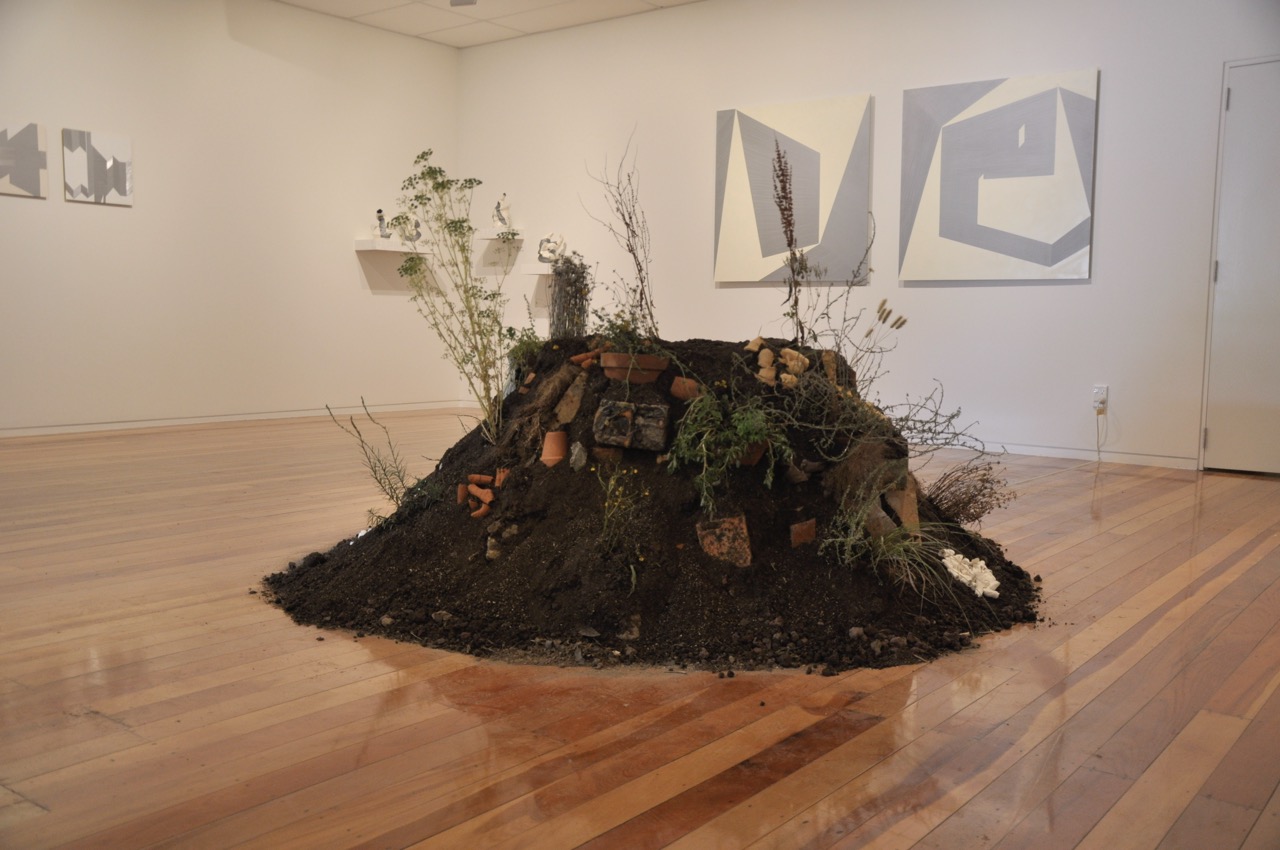
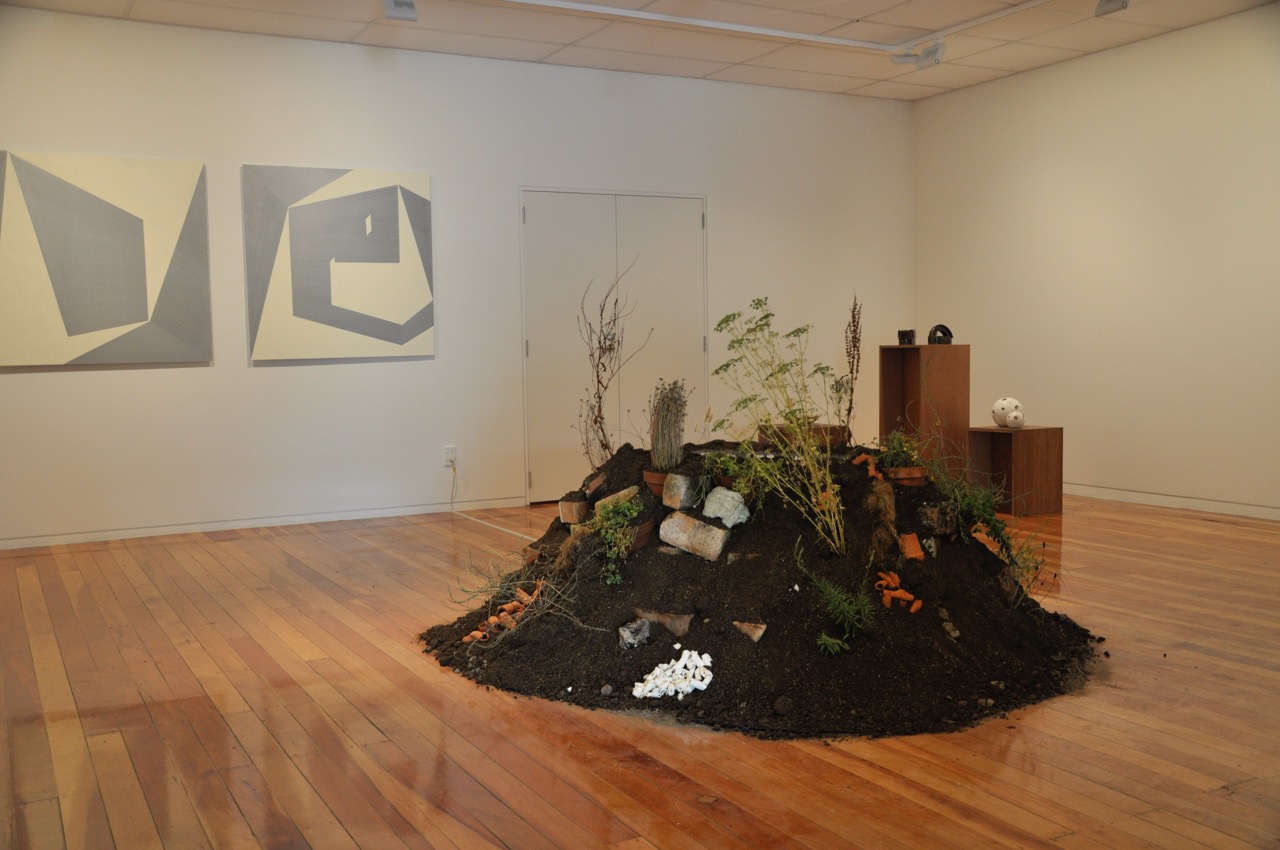
Papakura install:
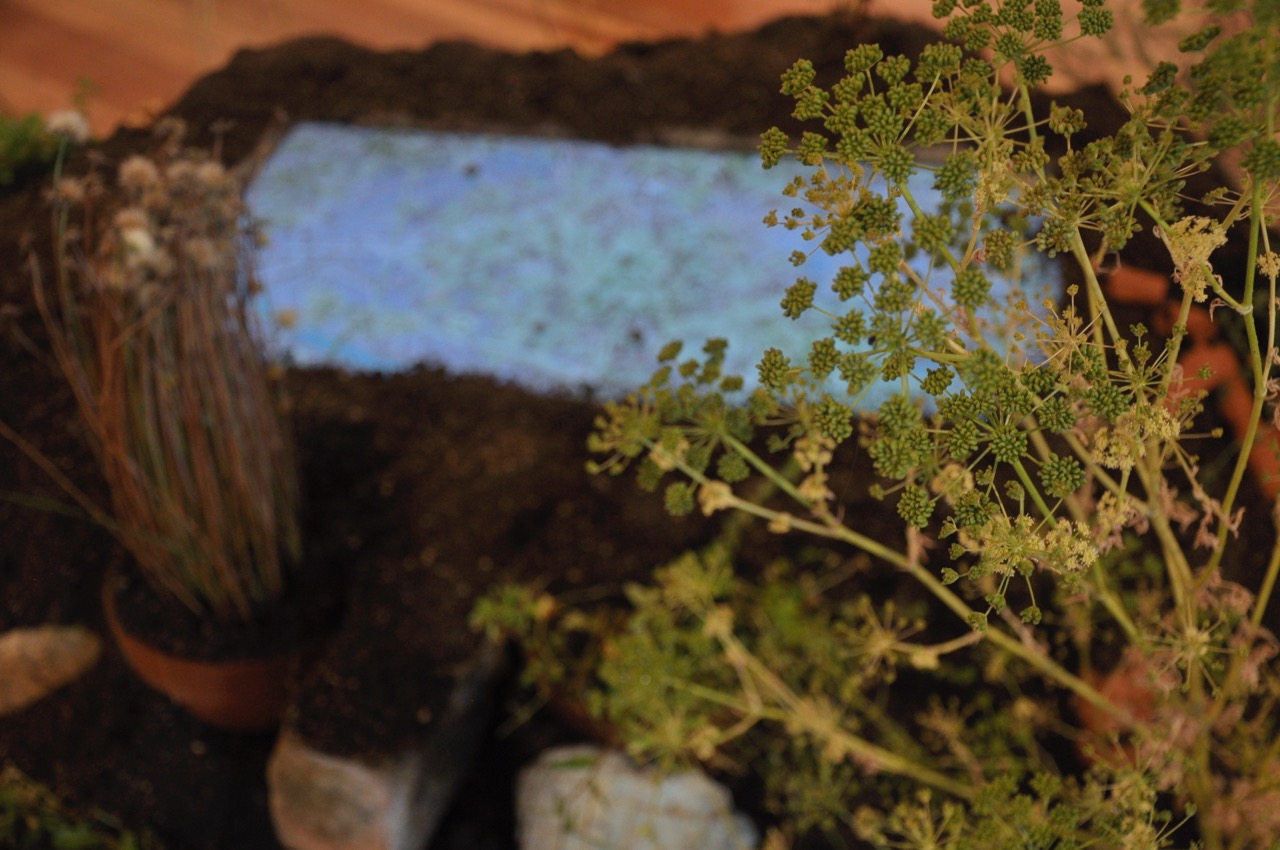
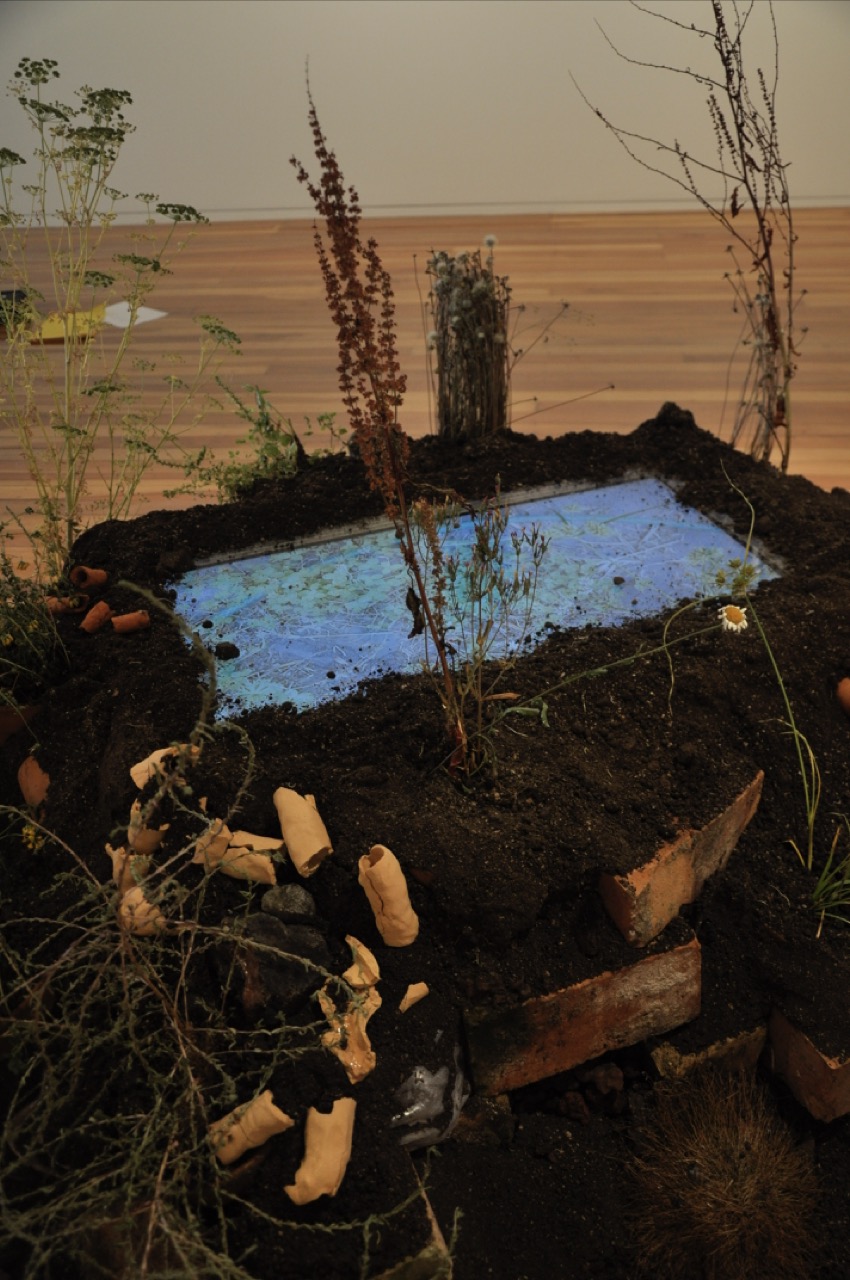
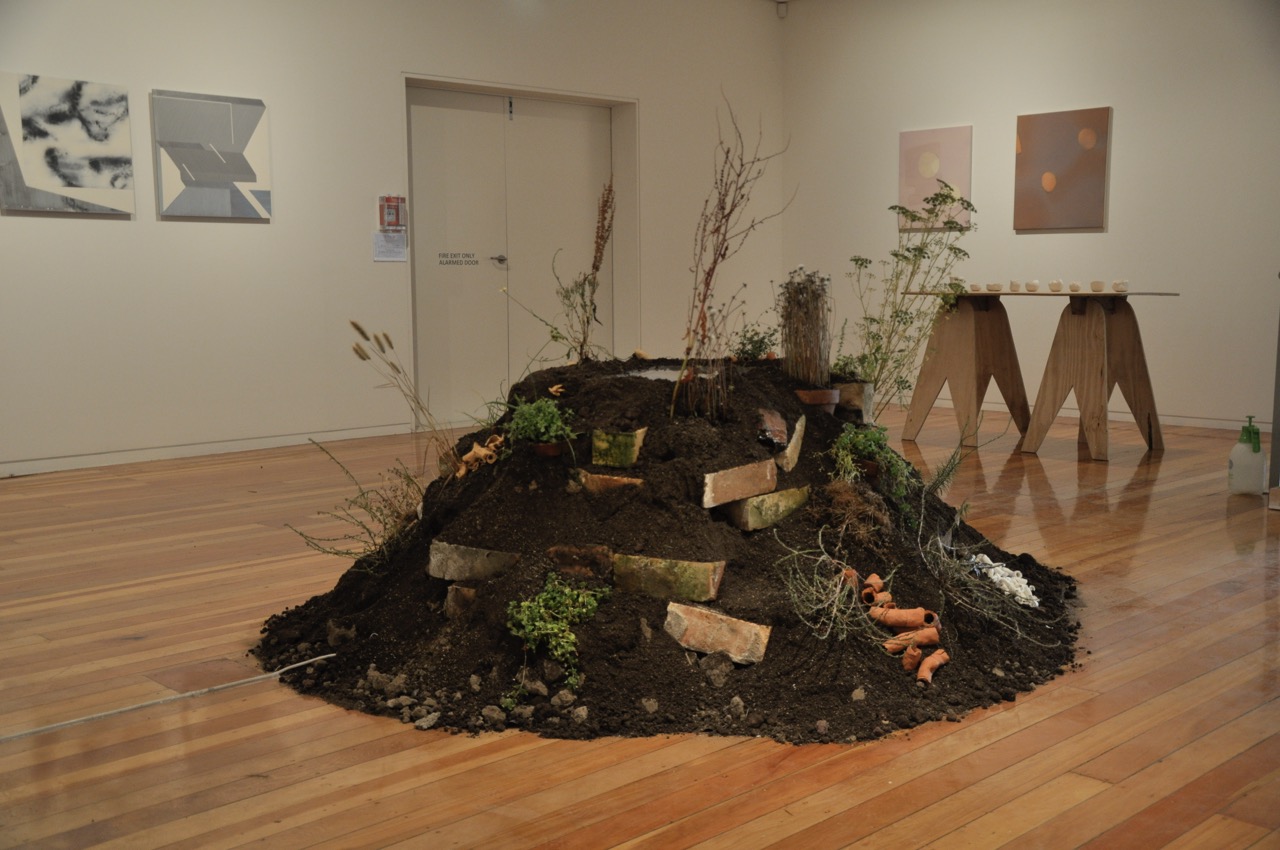
A version of this work was installed in 'FORM', curated by AD Schierning at Papakura Art Gallery in 2015. In this iteration, a screen is embeded in a mound of soil, shards of ceramic, and weeds collected from Scott Rd. This work was a responce to the temporary piles that lined the side of Scott Rd in 2015, a trace of the building activity that characterised the site between 2015 and 2022.