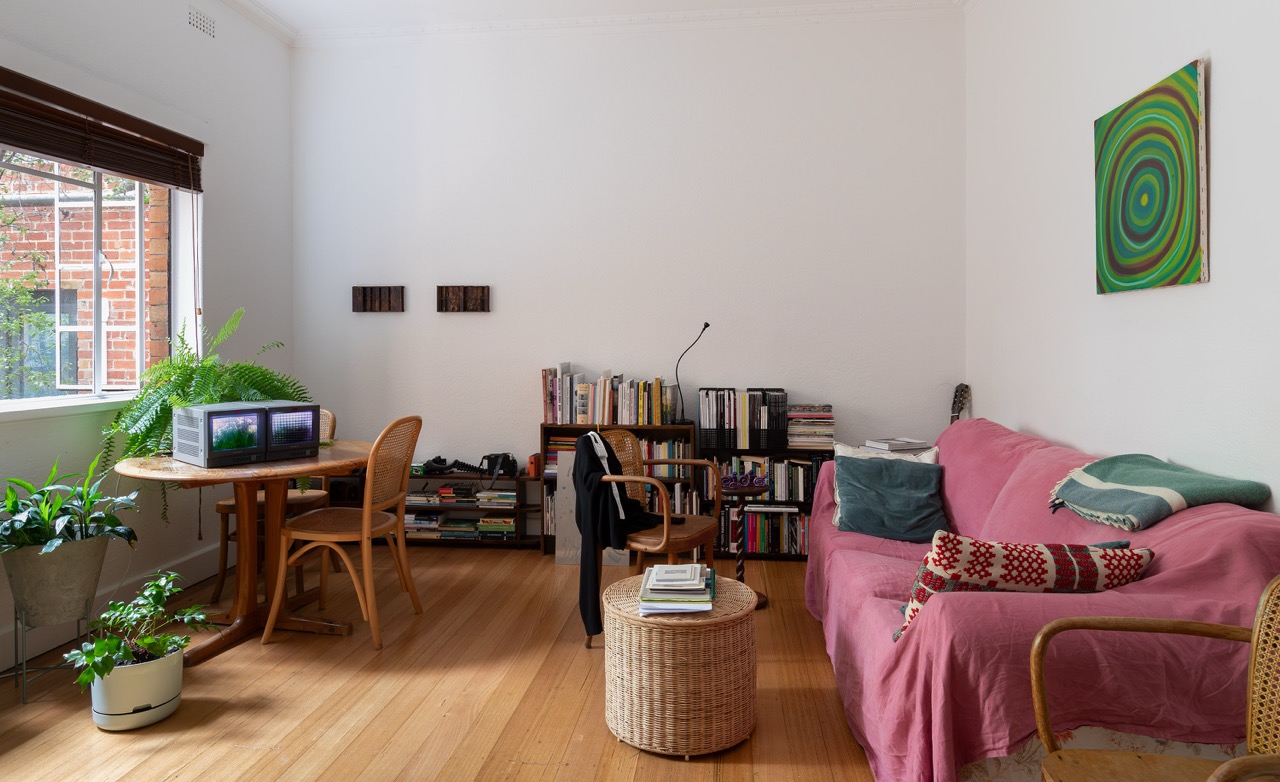
The edge of the plane without thickness
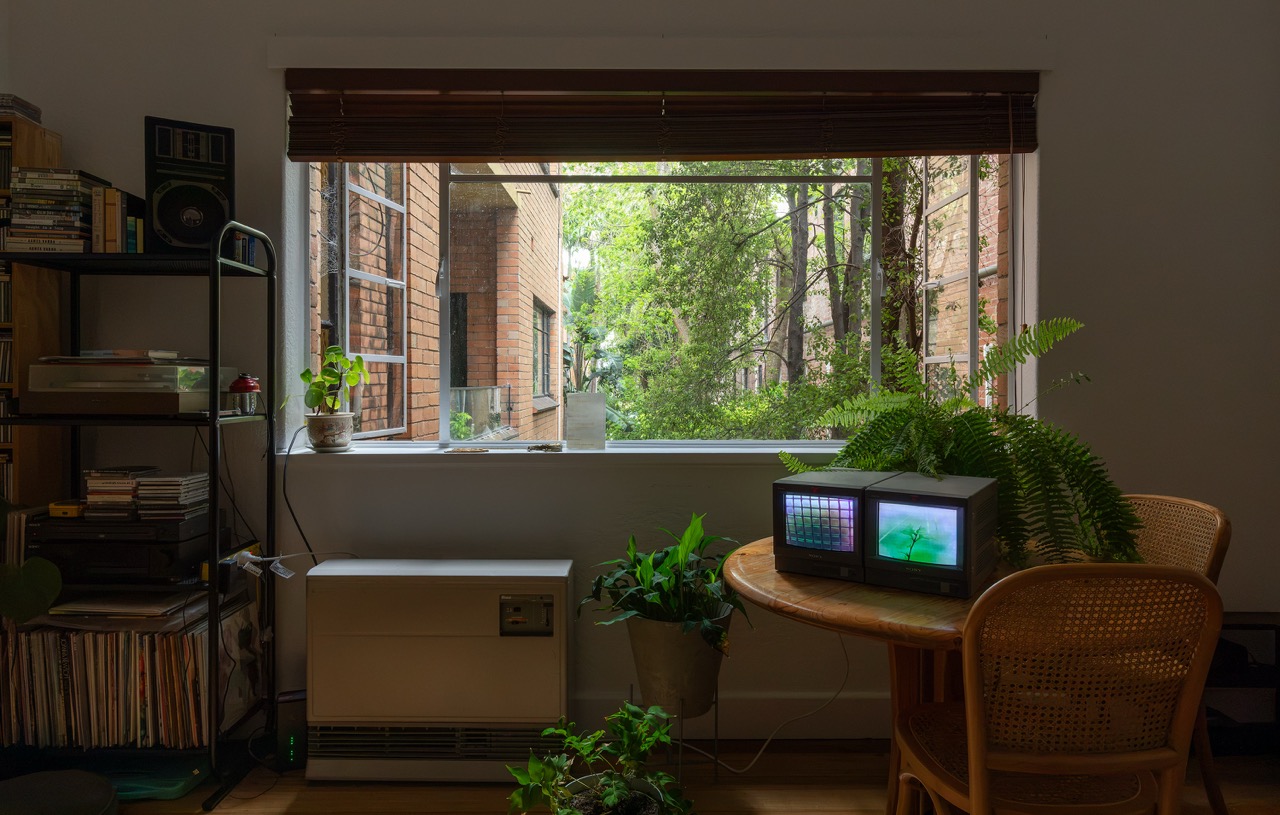
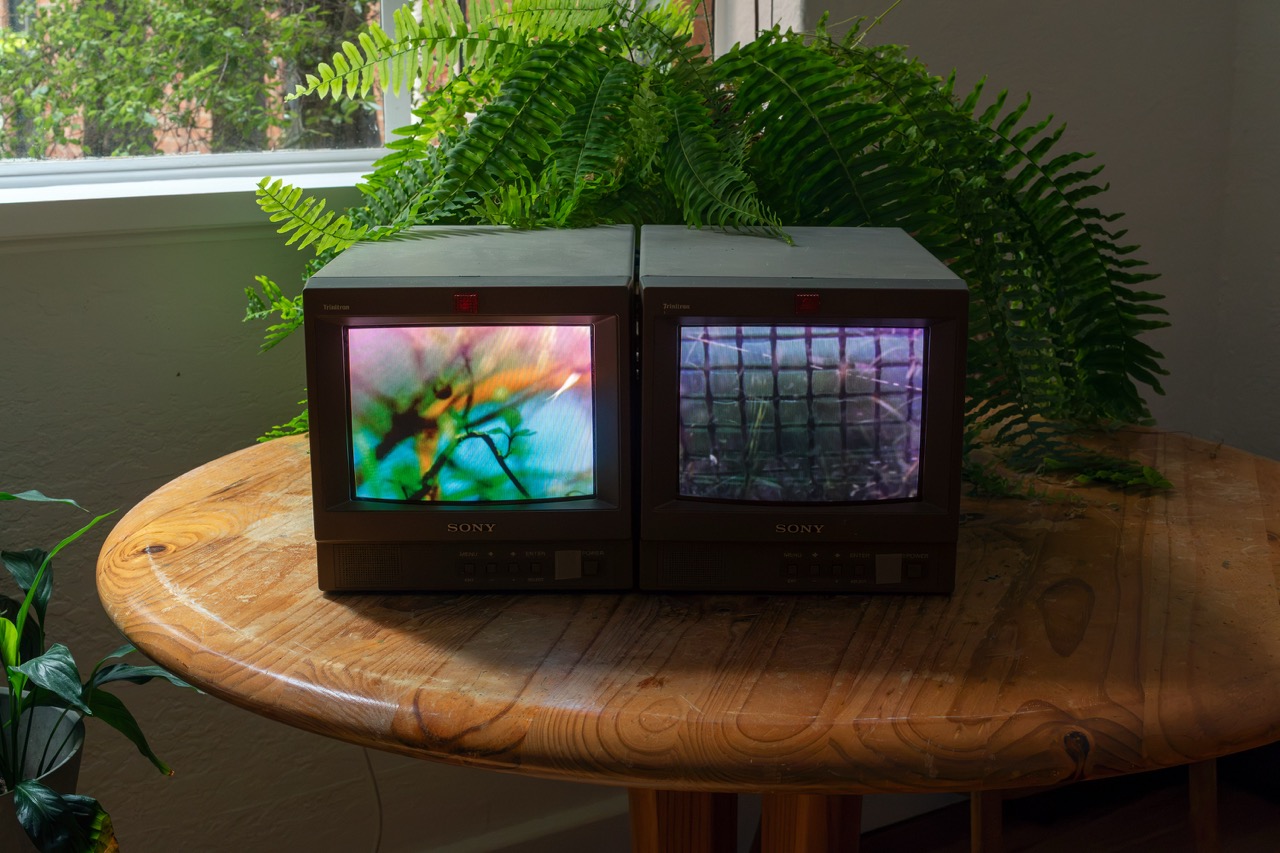
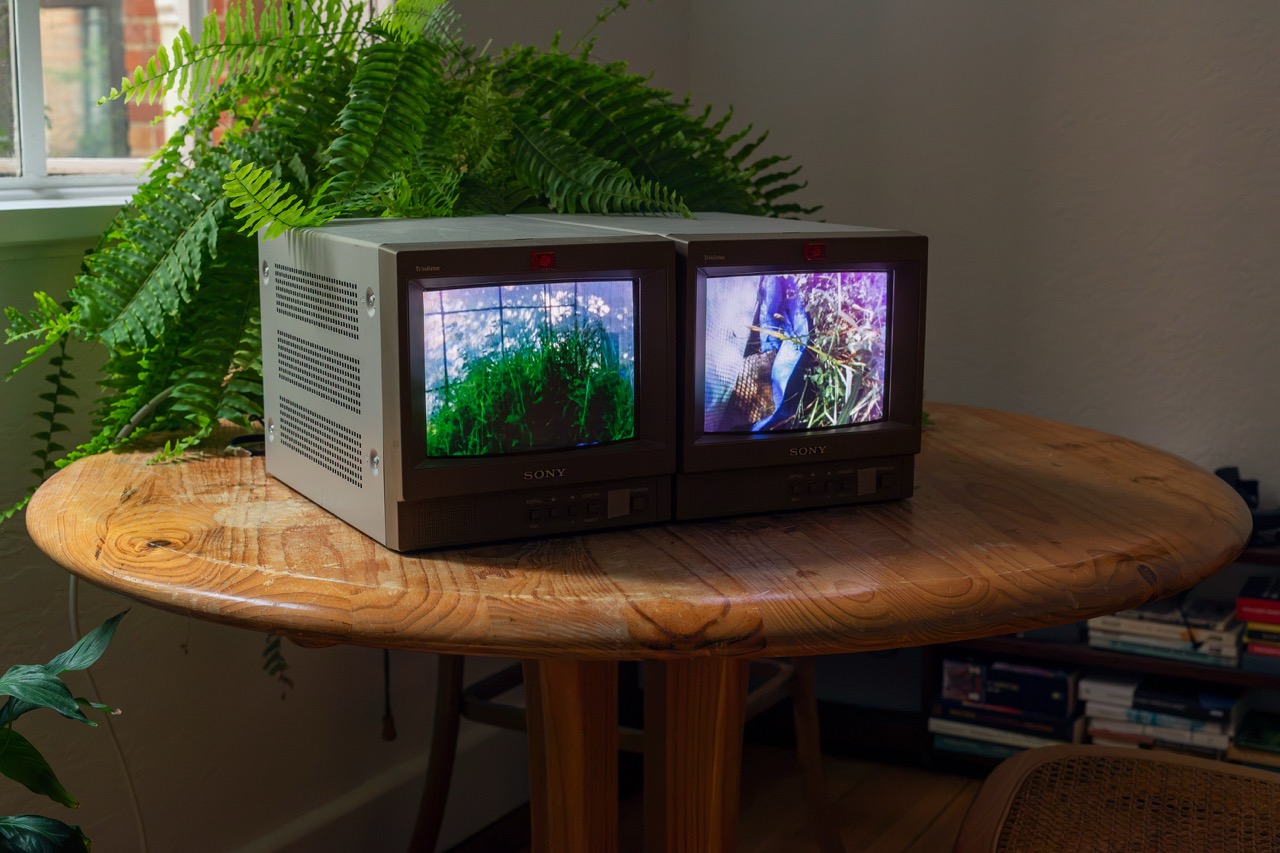
The edge of the plane without thickness, 2026. CRT monitors, 16mm film (expired Agfachrome RSX II 200 cross processed E6-ECN2, HD digital scan), 12:08 mins un-syncronised two-channel loop, sound.
Part of ‘animal, vegetable, mineral’ curated by Fiona Williams.
Angela Brennan (AU), Ed Ritchie (NZ), Femke de Vries (NL), Fiona Williams (AU), Lucy Meyle (NZ), Sonya Lacey (NZ), Ziggy Lever (NZ)
[24 October – 01 November 2026]
Living Room Euro Y’roke St Kilda
Naarm
__
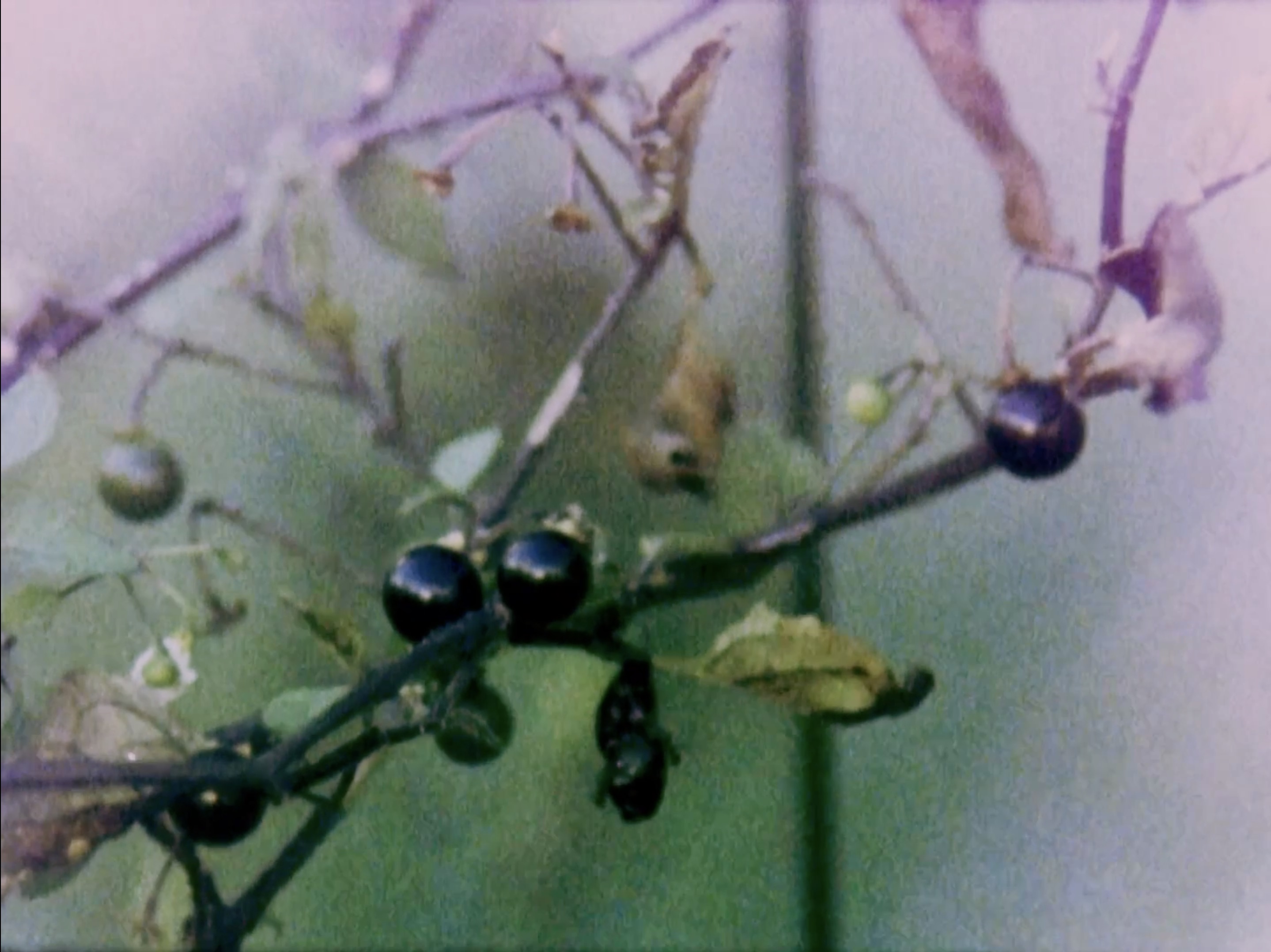
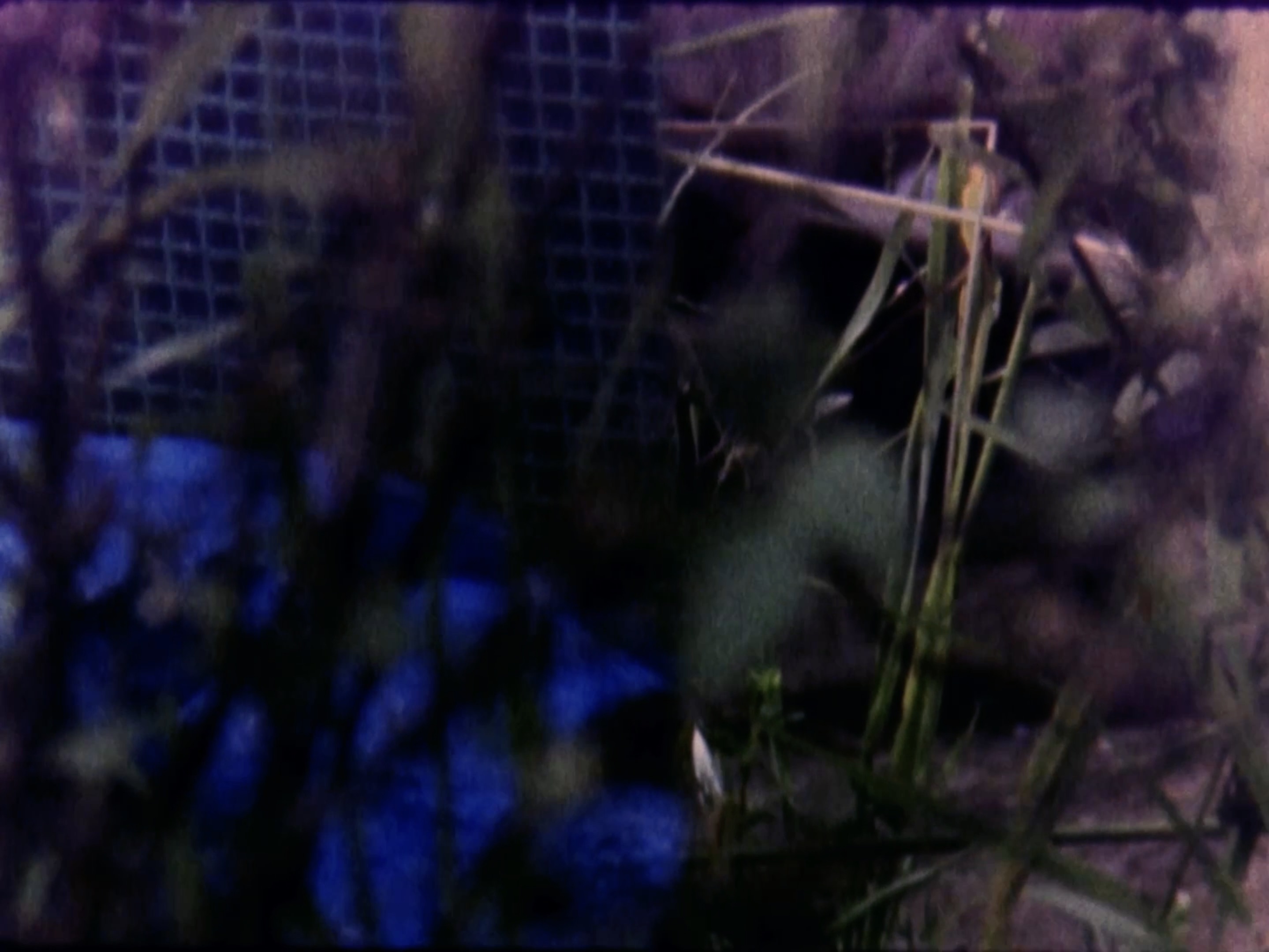
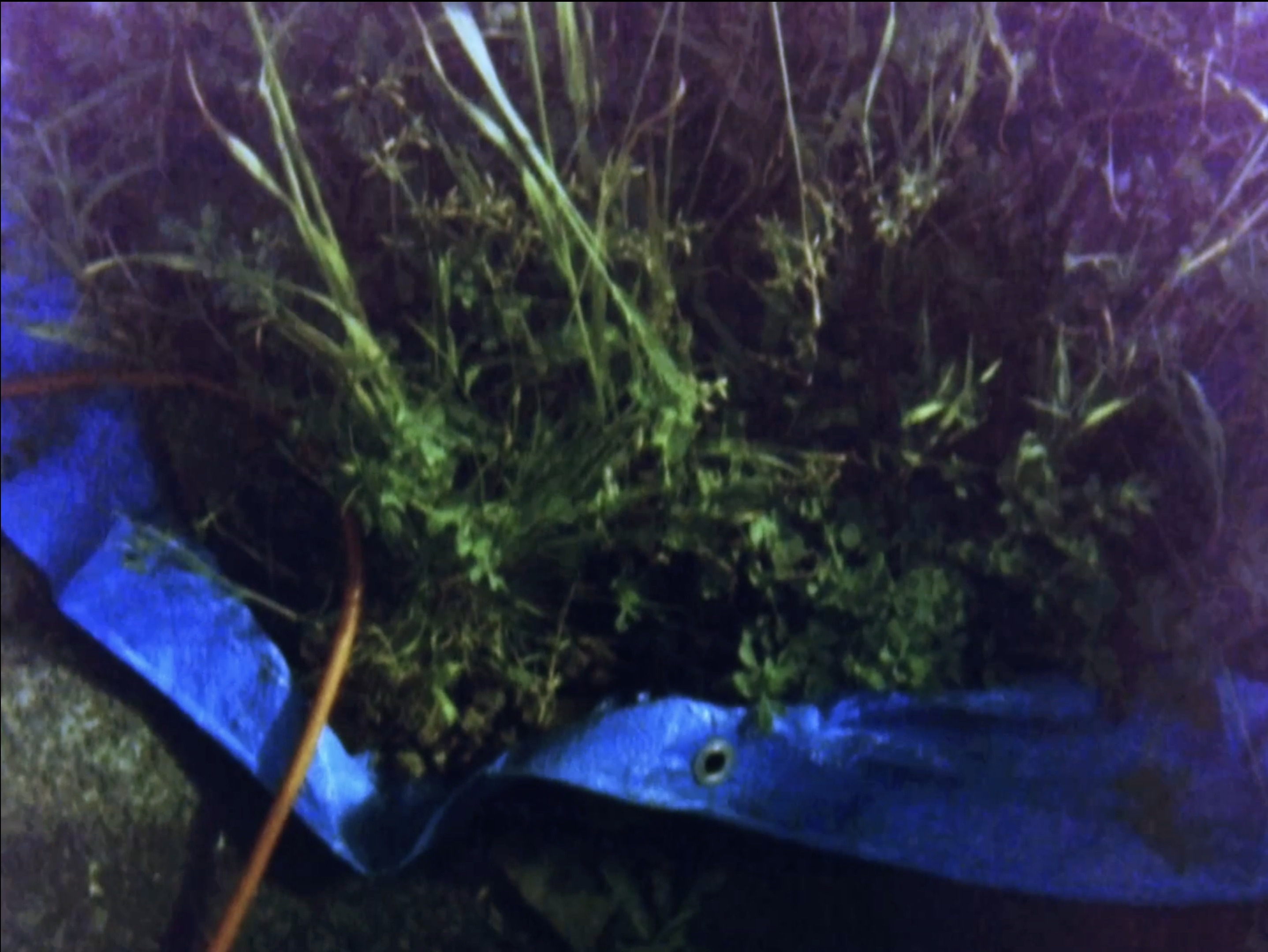
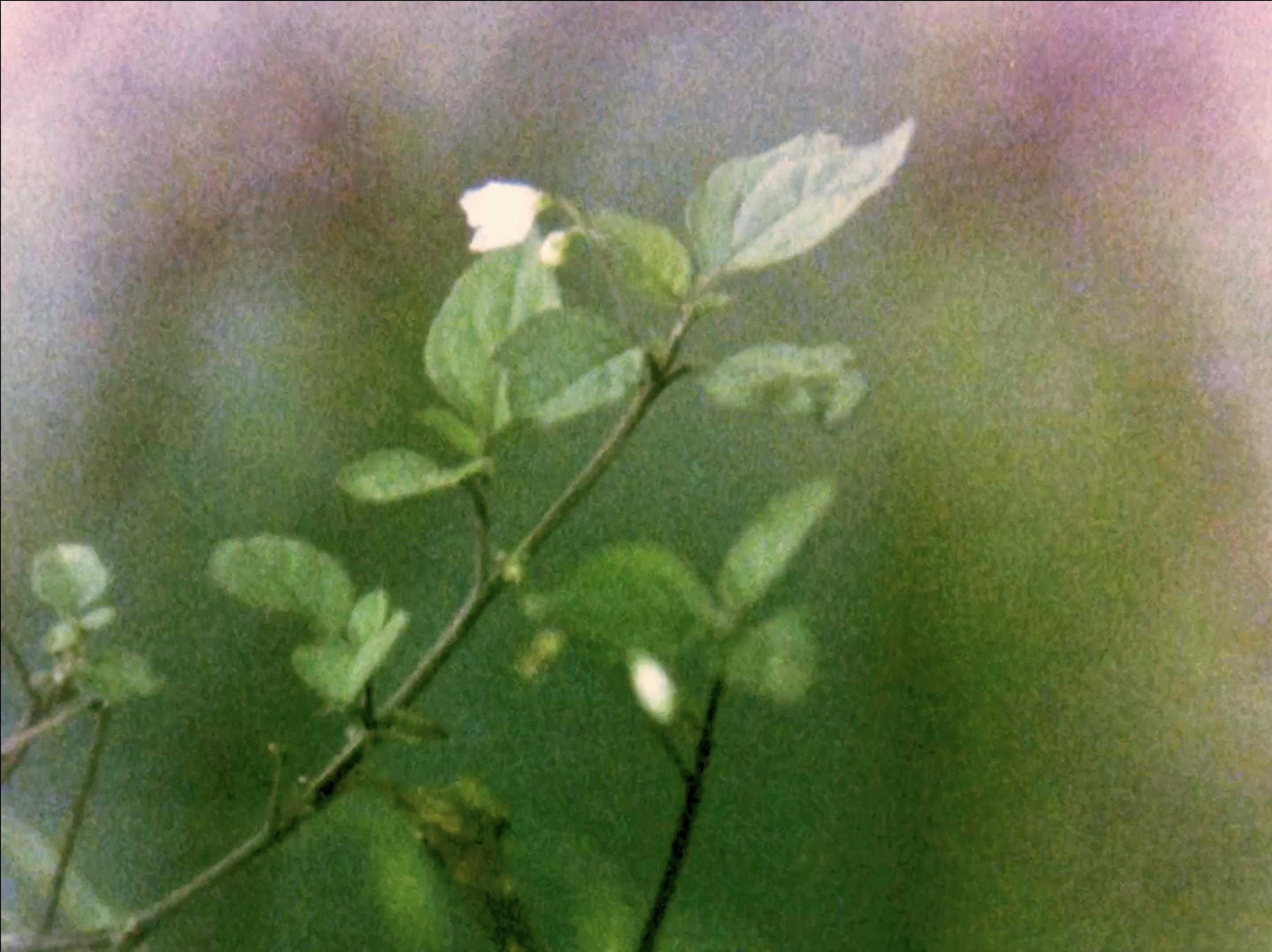
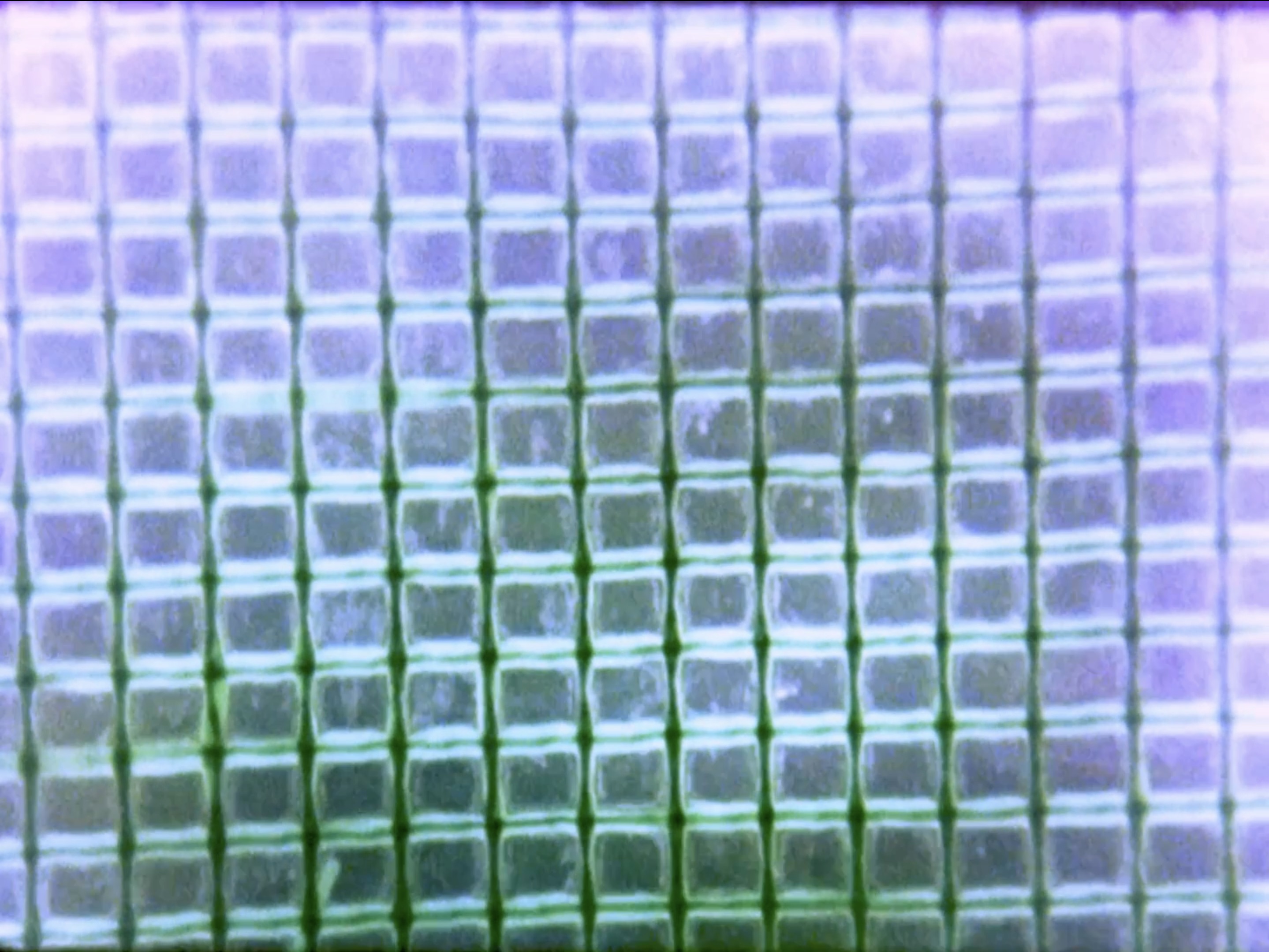
The edge of the plane without thickness is a two channel moving-image work for CRT monitors as an un-syncronised endless loop. The work was filmed on expired Agfachrome RSX II 200 16mm film stock (sold as Wittnerchrome), and was cross processed E6-ECN2.
The work documents a pile of weeds and soil within a greenhouse structure as a temporary installation. I consider both greenhouse and pile to be a kind of “time-matter-machine” that simultaneously decomposes (within the pile) and supports accelerated growth (within the greenhouse). The 16mm film had also been lying in wait, having purchased the stock in 2015 for a project that fell through. The expired film was in its own process of decay, and the edges of the emulsion is pulling away from the negative. The pile of weeds had been left to languish on a blue tarpaulin for some months before the greenhouse was introduced, and had become a popular nighttime spot for neighbourhood cats to frequent. I began to think about the pile as a site of everyday alchemical transformations. The tarpaulin underneath the pile acted like a membrane to this world in progress, a thin layer between returning to the soil and stasis. I thought about how the action of removing plant matter from the garden relates to an economy of extraction, and decided to place a greenhouse over the pile to try and shift my relationship to it.
A greenhouse is often a space of hope for the future. Here, small plants can be sheltered from the buffeting winds, curious or clumsy animals, and sudden downpours. It is a site of attention and potential to grow, a warmer microclimate that enables a gardener to stretch out the growing season. Placing the greenhouse over the pile seemed to designate it as protected space, ‘in waiting’ — neither coming or going into the rest of the garden, against progress. As well as the greenhouse, tarpaulin, and pile of weeds, rocks, and soil from my garden, the installation featured other introduced components such as a slowly rotating mirror, disco ball motor, orange extension cable, cast pewter ruler, a brick made from memory, metal slag, glass planes, and pieces of silicon moulds. One day during a storm, the greenhouse lifted and blew over the house into the neighbours garden. I consider this work as a form of installation documentation as well as moving-image work, and as an installation it contains an archive of temporary positions and relationships condensed into one thought.
The outside contained and echoed back, a standing wave. This time it’s for real. To borrow a scale for a time, we turn to the past to travel by mirror. The future exists to prepare us for the past, for light doesn’t experience time.
__
Special thanks to Fiona Williams for organising this exhibition, Ian Powell for processing and scanning the film, Monique Redmond for helping me retrieve the greenhouse after the storm, and to Leslie Eastman for sourcing the monitors in Naarm.
Related projects:
Flat Viewing, 2026
Beam Splitting, 2017-19
Floorboard Intervention, 2011
© Copyright Ziggy Lever